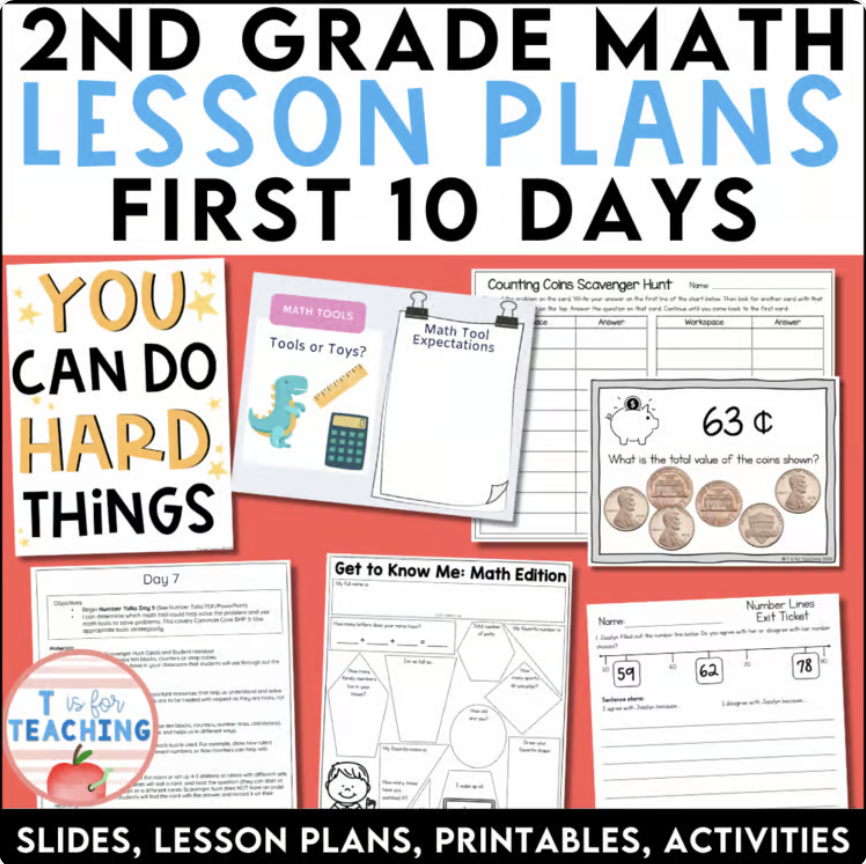
The first 10 days of math in 2nd grade are about so much more than worksheets and review problems. They’re about building a community of mathematicians who feel safe to share ideas, take risks, and stick with a problem even when it feels tricky.
I used to jump straight into content, thinking I was “getting ahead.” But the truth? When I slowed down to intentionally teach routines, expectations, and math habits in those first days, my year ran smoother, my students felt more confident, and our math block became one of the best parts of the day.
I’ve tested and tweaked this sequence over the years, and it’s my go-to plan for setting up a successful math year.
It blends back-to-school activities, skill review, and the foundations of a strong math culture.
Day 1: 2nd Grade Math Icebreakers + Math Notebook Setup
Learning Goal: I can get to know my classmates and teacher. I can set up and decorate my math notebook cover.
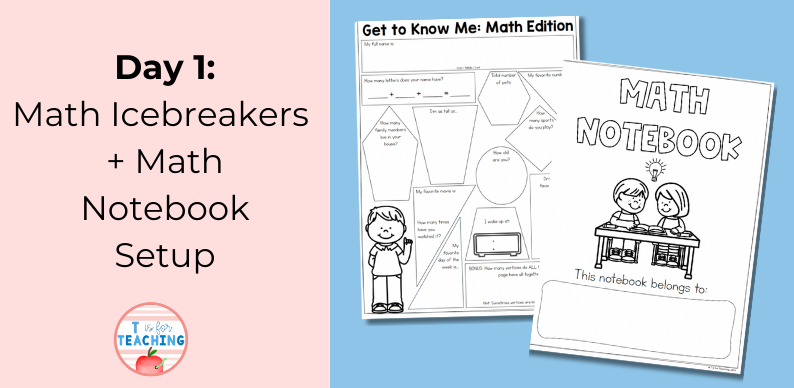
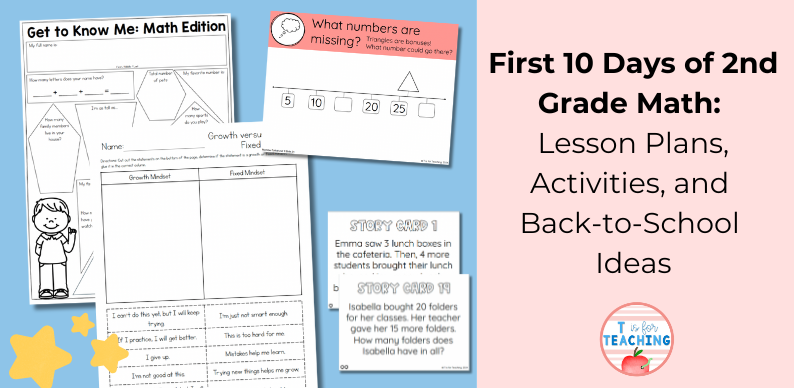
The first day goals are to get the students fed and home safely so everything else is bonus! If you end up with time for math on the first day- sometimes I do, somethings I don’t- it is all about connection. I start with a Get to Know Me math page so students learn a few fun facts about me while practicing simple math questions. Then, we decorate our math notebook covers so they feel personalized and important.
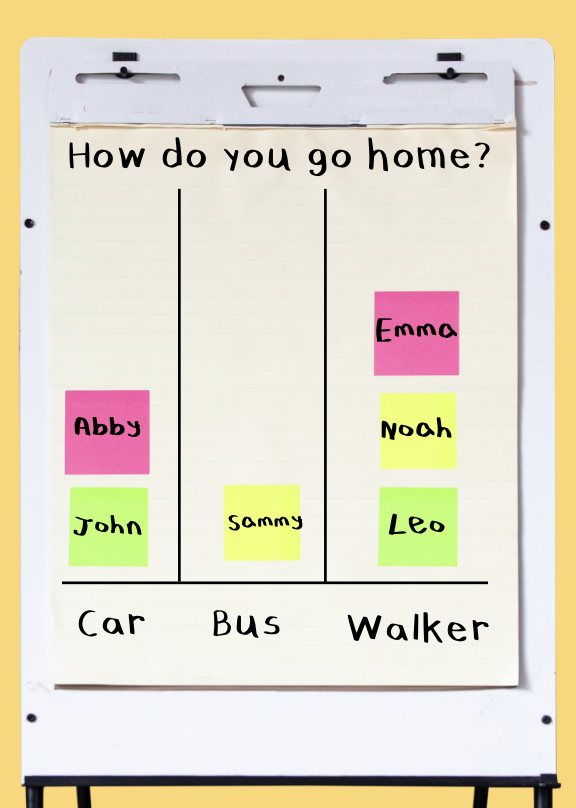
For our math activity, we do “My Favorite Is…” graphing—favorite recess activity, color, or way to get home. It’s quick, gets everyone moving, and sneaks in data collection and graph reading without anyone even realizing they’re doing math.
Day 2: Creating 2nd Grade Math Norms
Learning Goal: We will create class norms for expectations we will normally follow in math.
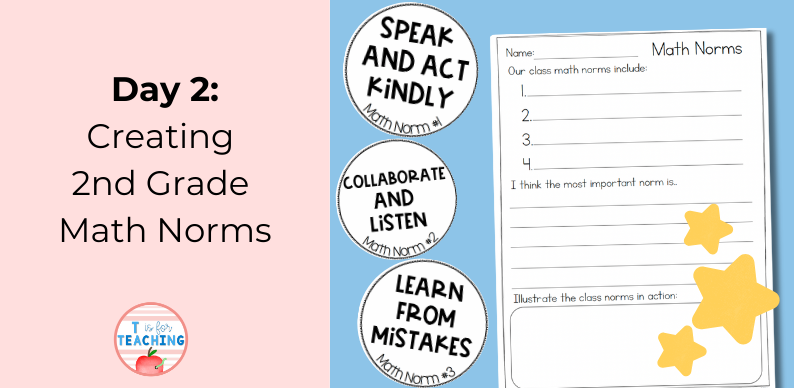
Rather than simply telling students the rules, we create our Math Norms together. We discuss what makes math time feel safe, respectful, and productive, and I record their ideas on a chart. This process helps students feel ownership of our math space.
While I value all of their contributions, I usually guide the discussion so their ideas connect to the four core math norms I’ve preselected. Most suggestions naturally fit into one of these norms. However, some years the norms do change—if a class brings up a thoughtful or unique idea, I’m happy to add or adapt a norm to reflect it. Students can surprise you with their creativity!
I give them a printed norms page to keep in their math notebooks and hang a large version in the room for easy reference. These norms will become the backbone of our year.
Grab the first 2 days of lesson plans—complete with activities, class norms printables, and discussion starters. It’s a 30-page resource, and it’s yours FREE!
Day 3: Number Talks + Growth Mindset in Math
Learning Goal: I can have a growth mindset in math and persevere when solving problems.
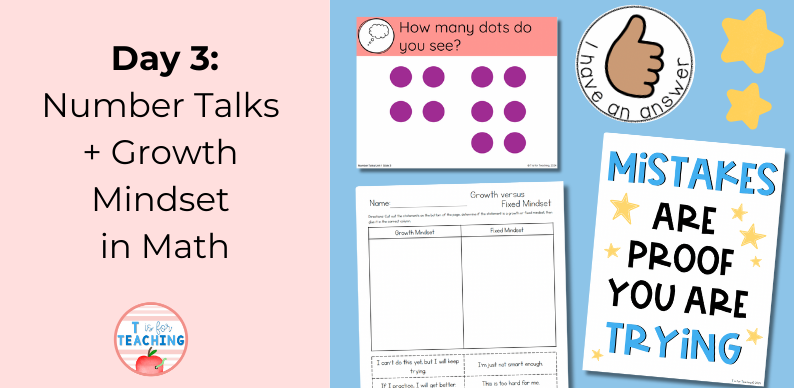
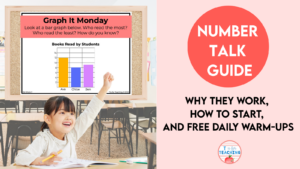
Today, we dive into our first Number Talk. Number Talks involve a slide that is projected for all students to see and encourages mental math, flexible thinking, and problem solving. It is also a great way to introduce new topics or connect topics!
I model exactly how they work:
-
Looking at a problem
-
Thinking quietly
-
Sharing strategies
-
Listening respectfully to others
All of the specifics with step-by-step lessons, printable hand symbols, discussion stem posters, and the slides are all included HERE.
We focus on recognizing small quantities without counting one by one for the Number Talk, and I introduce growth mindset for the core lesson. I tell students mistakes are proof our brains are growing, and we practice phrases like, “I’m not sure yet” and “Let me try another way.” We watch a video and students complete a sort of if the statement is one of a growth mindset or a fixed mindset.
Day 4: Acting Out and Modeling Story Problems
Learning Goal: I can make sense of real-world problems by acting them out, drawing them, or using manipulatives.
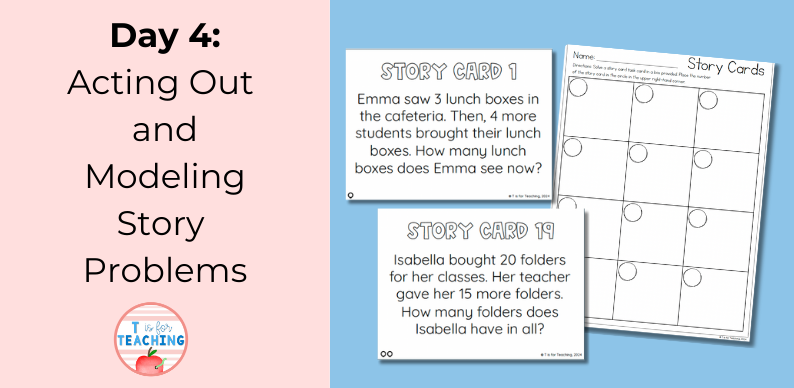
We continue Number Talks but shift to numbers up to 10. Then, we work with real-world story problems. Students act them out, draw models, or use manipulatives to solve.
This day is about showing them that math is more than just “find the answer.” It’s about making sense of the problem and using different strategies to figure it out.
The story cards I use are differentiated by difficulty: one circle for the easiest level, two circles for a bit more challenge, and three circles for the hardest problems. Teachers can choose to use only cards 1–12, with a matching recording sheet for those numbers, or offer students the full range so they can select their own level.
I find it very telling, especially early in the year, to see which students are eager for a challenge and which prefer to stick with the easier problems. There’s a lot to learn about students by simply observing their choices and problem-solving approaches during this activity.
Day 5: Using Number Lines + Agree or Disagree
Learning Goal: I can place numbers on a number line and explain my reasoning.
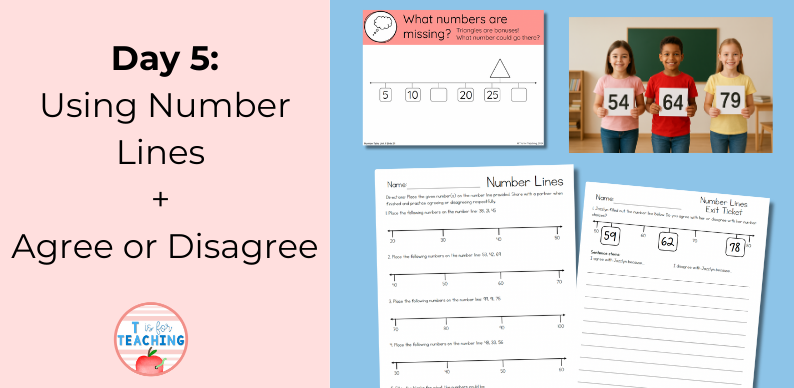
Today’s Number Talk focuses on visualizing numbers and using mental math. Our main activity is working with number lines—students decide where numbers belong and explain their reasoning.
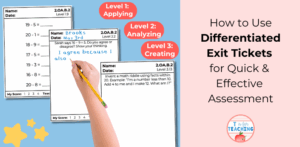
We introduce respectful math talk with the question, “Do you agree or disagree?”—a perfect match for number line activities, where there are plenty of opportunities to agree or disagree as students place numbers. This encourages them to think critically about others’ strategies while building strong communication skills. Students also practice using sentence starters to develop their math discussion abilities. If time allows, an optional exit ticket can be used to reinforce the day’s learning.
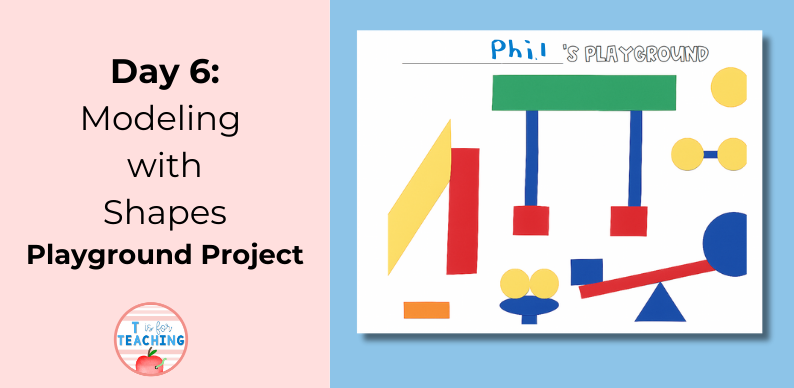
Day 6: Modeling with Shapes (Playground Project)
Learning Goal: I can model with mathematics by creating a playground using shapes.
We explore the part-whole relationship by finding pairs of numbers that make a target number. I also read aloud a book about cats building a robot out of shapes that moves in the wind. The story reviews shapes while showing how the cats use them creatively to construct their robot. It’s a fantastic tie-in for STEM, highlighting the process of planning, creating, and revising.
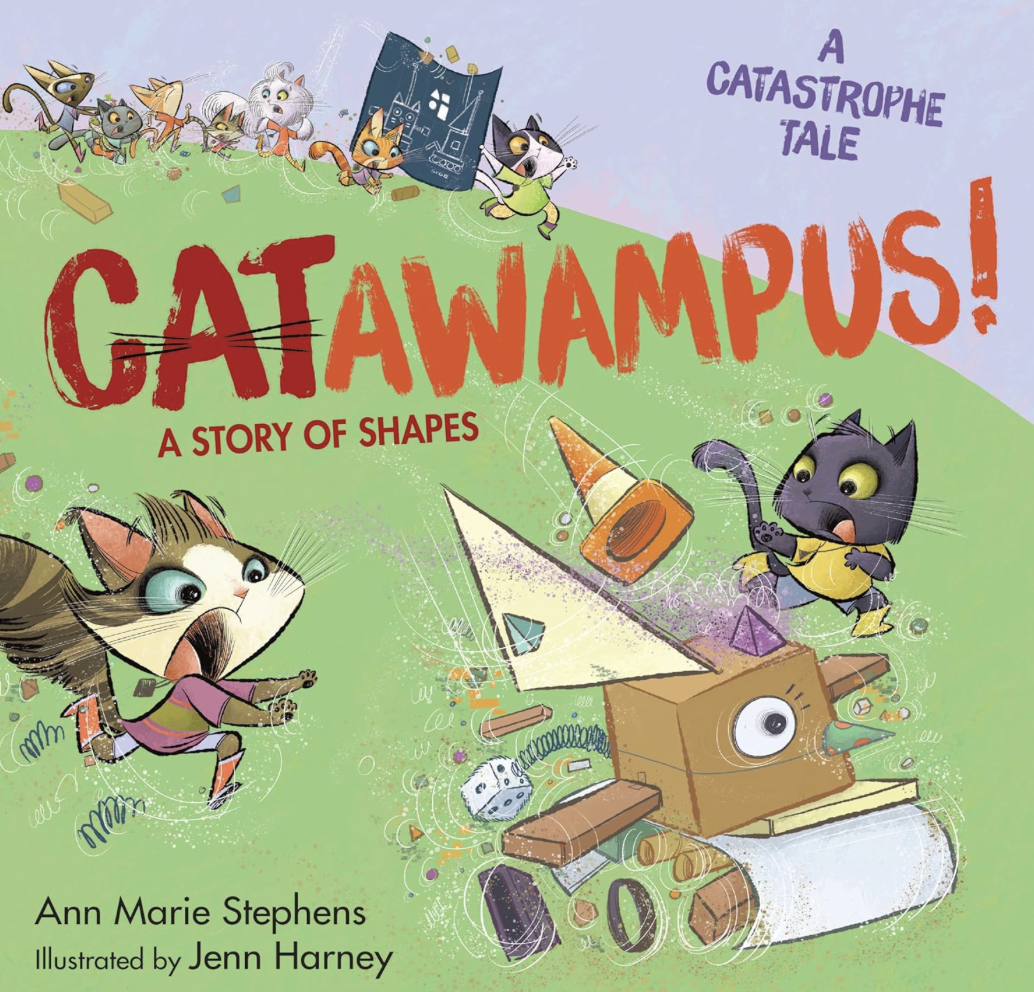
I especially love the teacher character in the book, who reminds the cats to stick to their plans — something I can definitely relate to as a teacher! After the read-aloud, students design a 2D playground model using shapes, either from pre-cut pieces or construction paper. This is a fun twist on the book since, unlike the cats’ 3D robot, our creations stay flat in 2D.
This project is always a hit and a great way to show how we can model with mathematics in creative, real-world ways. I enjoy including project-based learning in math units so this is an easy way to introduce to students to that concept they will see in weeks to come.
As a wrap-up, I use an exit ticket where students infer other places or objects that could be modeled using shapes and measurements.
Day 7: Math Tools Scavenger Hunt
Learning Goal: I can choose the right math tool to help me solve a problem.
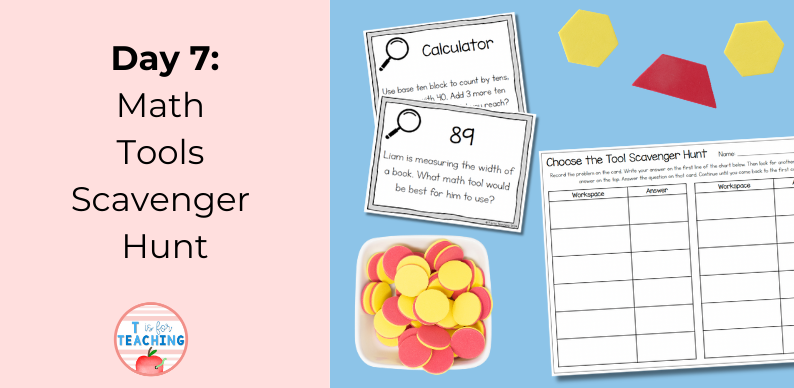
On this day we talk about different math tools—rulers, base-ten blocks, pattern blocks, counters—and how they help solve problems.
Then comes my favorite: the Math Tool Scavenger Hunt—and students LOVE it! This isn’t your typical “find an item in the classroom” hunt. Instead, each task card has a question, and the answer can be found on another task card somewhere in the room. Once they find the answer, it leads them to the next question, and so on, creating a circular hunt where students can start at any card. Along the way, they match math tools to the types of problems those tools can help solve. The big takeaway? Math tools are for learning—not for playing.
Day 8: Counting Large Collections
Learning Goal: I can count large numbers with precision and write them accurately.
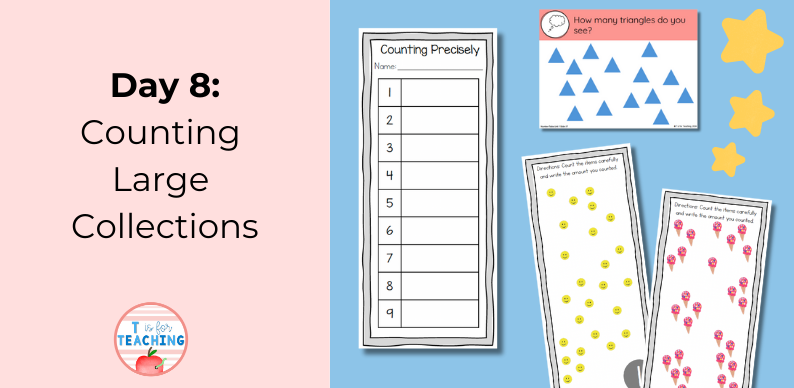
Students practice grouping objects to count accurately—by 2s, 5s, 10s, and beyond. We use manipulatives like counters or snap cubes and explore multiple ways to count. The activity is scaffolded: we begin with a daily Number Talk, then count objects together as a class, and finally, students work independently with the task cards. It works best if the task cards are copied so students can write on them, placed in page protectors, or laminated. Circling objects in groups of 10 helps students count more precisely.
This helps build precision and lays a foundation for multiplication and division concepts later in the year.
Day 9: Patterns on the Hundreds Chart
Learning Goal: I can recognize and explain patterns in skip counting on a hundreds chart.
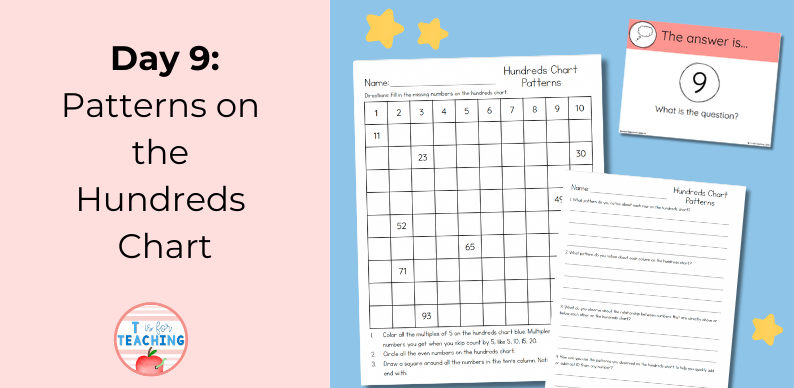
We explore skip counting and patterns. Students color code patterns on their hundreds chart, noticing what happens when we skip count by 2s, 5s, and 10s. This is a review from 1st grade but it is a skill many students do need to revisit. The hundreds chart is easy but telling others and writing about the patterns can be tricky and worth spending time on.
They love discovering patterns on their own!
Day 10: Skip Counting + Money
Learning Goal: I can skip count by 5s and 10s and see how it relates to money.
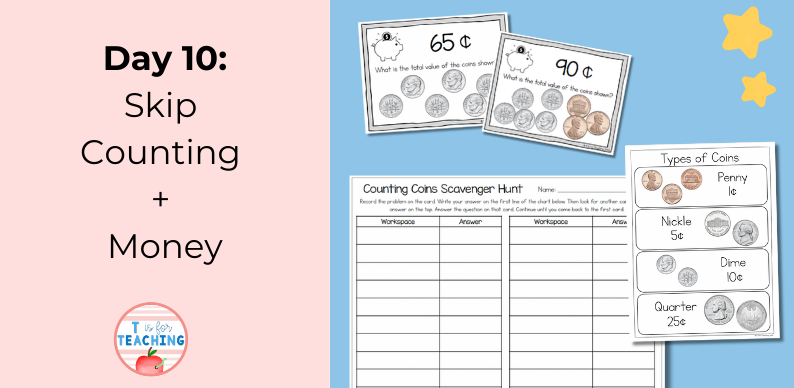
We finish our 10 days by connecting skip counting to coins. Students practice counting by 5s and 10s, using both printed coins and coin manipulatives.
We wrap up with another scavenger hunt (a favorite!) that combines movement, problem-solving, and money skills—always a high-energy way to end our first math unit together. The task cards for the scavenger hunt have students count by 5’s and 10’s only as it is a review from 1st grade. It gives me great insight to student’s current math skills.
Centers/Extensions
During these 10 days, I do try to slowly ease into my math block framework.
Number Talk → Core Lesson → Activity/Seat Work → Centers/Extension.
Depending on the day, my students, and our schedule, I like to start introducing centers and extension activities early in the year—especially when we have a little extra time. These activities not only keep students engaged but also set the stage for building independence in our classroom routines.
One of my students’ favorite center options is technology time, where they can practice skills using Boom Cards on Boom Learning. This platform is such a win for both students and teachers. Kids love the interactive decks and the instant feedback they receive, and I love the detailed data I get in return. It’s an easy way to see which skills my students have mastered, who may need additional support, and what small groups I might need to pull.
Boom Cards also make it simple to keep learning fresh and fun throughout the year. I use them for review, enrichment, and quick checks to see where my students are with key skills.
Here are the Back-to-School Boom Cards I created and use during the first 10 days of school:
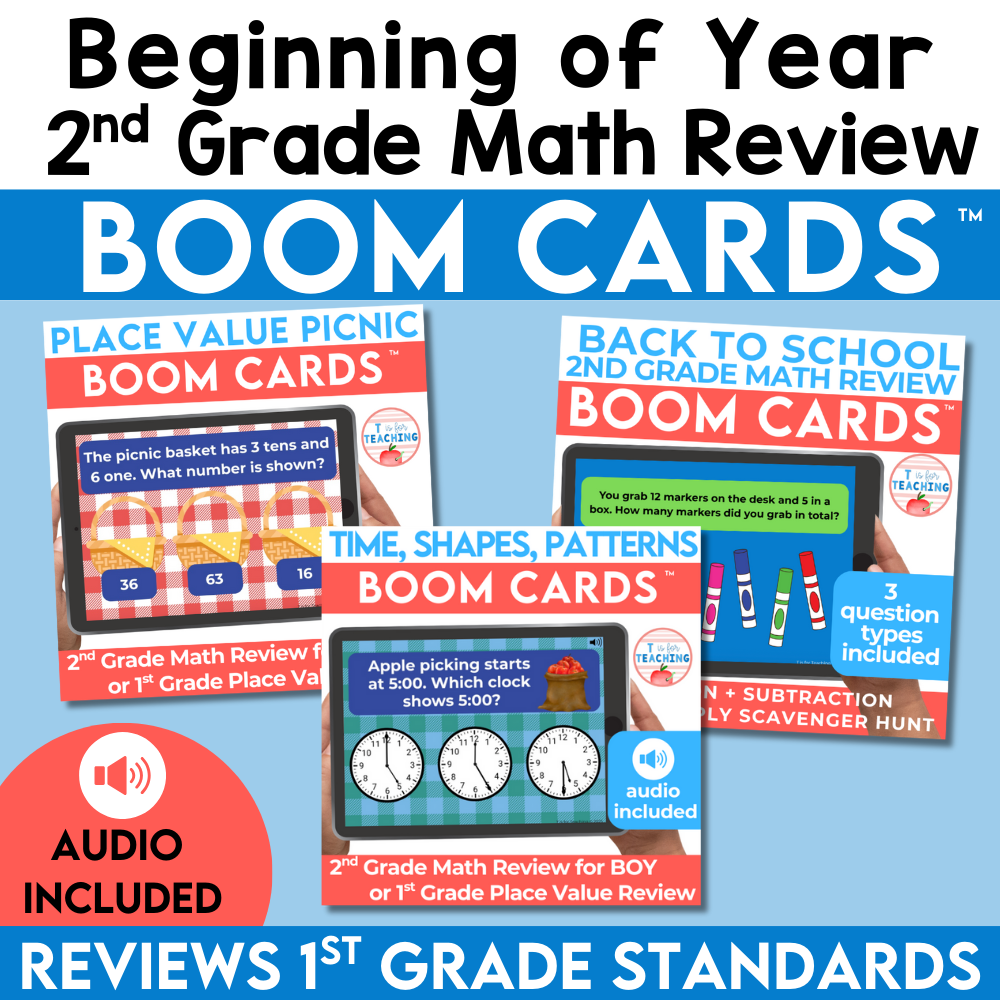
These decks are perfect for beginning-of-year 2nd graders because they review essential 1st-grade standards. This gives me a clear picture of what my students already know and where we might need to pause and review before diving into lessons that build on those foundational skills.
Final Thoughts
These first 10 days aren’t about rushing through every 2nd grade standard—they’re about setting the stage for a successful year.
By the end, my students understand:
-
How to work together in math
-
How to use tools and notebooks
-
How to talk about their thinking
-
That math is creative, challenging, and fun
We follow a simple framework: Number Talk → Core Lesson → Activity/Seat Work → Centers/Extension. Taking the time to build this foundation makes the rest of the year flow so much smoother!
🎉 Want the first TWO days for FREE? Click here!
✨ Ready for all 10 days of detailed, fun lesson plans to make your first 10 days of 2nd grade math smooth? Click here!