If your students think “proofreading” means adding one period and calling it a day… you are not alone.
Proofreading and editing are some of the hardest writing behaviors to teach because they require students to slow down, notice details, and apply skills they technically know (capitalization, punctuation, spelling, grammar)… all at the same time.
And if we’re being honest? Most of us don’t have time to create engaging editing practice from scratch every week.
The good news: there are a few research-backed moves that make proofreading instruction way more effective — and a simple routine that keeps it consistent without becoming one more thing on your plate.
Why proofreading feels so hard (and why students struggle)
Editing isn’t just “fixing mistakes.” It’s actually a high-cognitive-load task: students have to read closely, hold rules in their working memory, and make decisions about what sounds right — all while staying engaged.
That’s why students often:
-
read too fast and skip errors
-
“see” what they meant to write instead of what’s on the page
-
fix only one type of mistake (usually punctuation) and miss the rest
-
don’t transfer grammar lessons into real writing
That’s also why most writing research and guidance stresses explicit instruction in writing processes and strategies (including revising and editing), not just isolated practice pages.
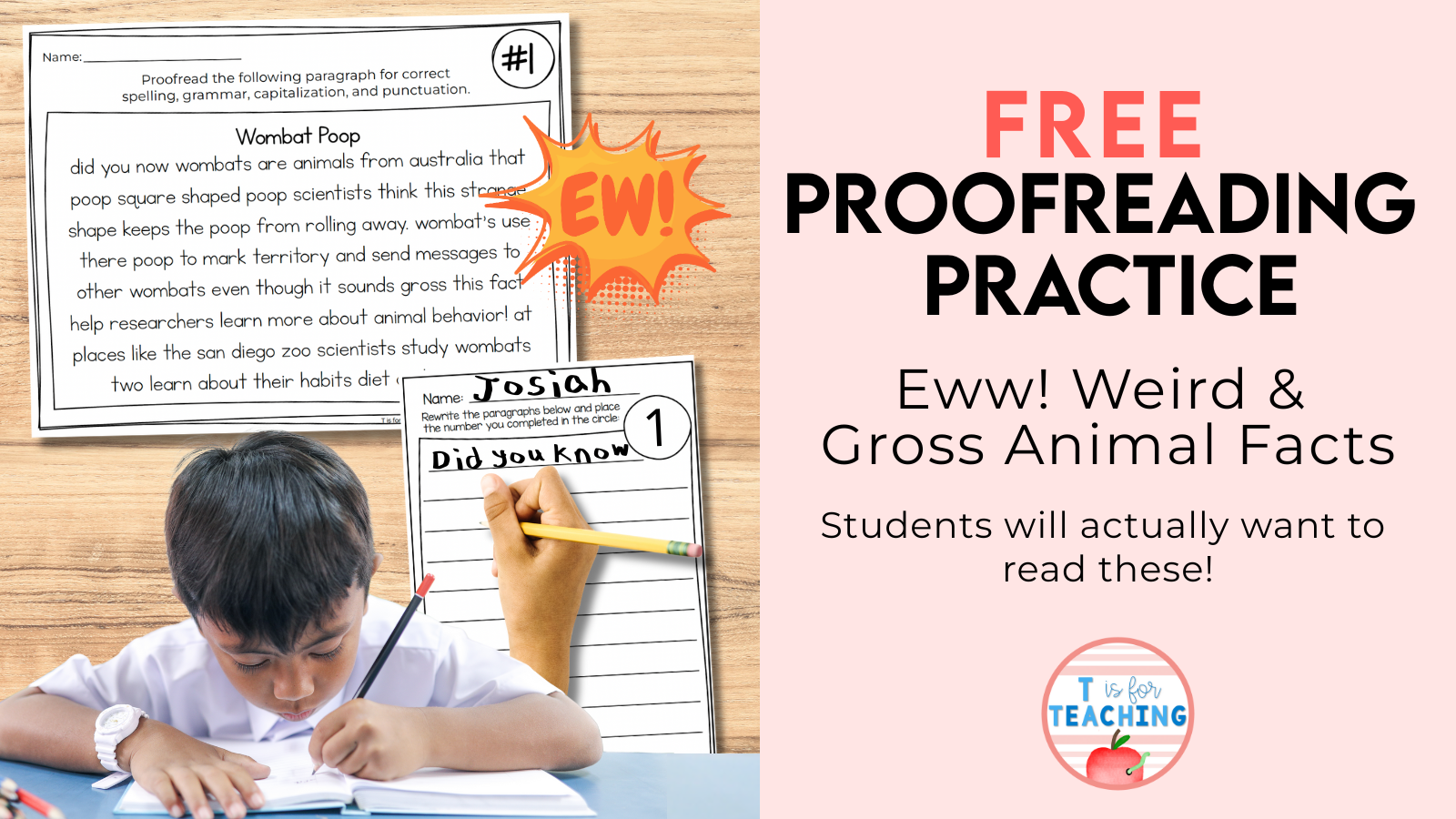
Get your FREE Weird and Gross Animal Facts Proofreading Practice HERE.
What research says works best for editing instruction
When I’m planning writing instruction, I come back to three big ideas that are consistently supported:
1) Short, frequent practice beats occasional “big editing days”
Daily writing time and consistent routines matter — not because every day is magical, but because students build stamina and automaticity over time.
2) Teach editing as a strategy (not a talent)
Strategy instruction — explicitly teaching students what to do, how to do it, and when to use it — has strong evidence behind it in writing research.
3) Grammar instruction sticks better when it’s connected to real writing
Instead of “gotcha grammar,” students benefit from noticing language in context and applying it to meaningful text.
So the goal isn’t “more worksheets.” The goal is more structured practice in real(ish) paragraphs, with routines students can actually learn.
A simple 10-minute proofreading routine that actually works
This is the routine I recommend (and it works beautifully as morning work, centers, or a quick writing warm-up):
Step 1: Set the purpose (30 seconds)
“Today we’re editing for conventions — capitals, punctuation, spelling, and grammar — because clear writing helps our reader.”
Step 2: Read once for meaning (1 minute)
Students read the paragraph once without marking anything.
This reduces the “fixing random stuff” impulse.
Step 3: Edit with a focus (5–6 minutes)
Students reread and mark errors using a consistent system (circles, underline, caret, etc.).
Teacher tip: Give them a “focus order” so they don’t hunt chaotically:
-
Capitals
-
End punctuation
-
Commas/apostrophes
-
Spelling/word choice
-
Grammar (verb tense, subject-verb agreement, etc.)
Step 4: Quick check (2 minutes)
Have students compare with a partner or do a fast teacher-led check of 2–3 common errors.
Peer response can be powerful when it’s structured and students know what to look for.
Step 5: Transfer (30 seconds)
This is the magic line:
“Pick ONE fix you made today and check your own writing for that same thing.”
That tiny transfer step helps editing move from “school activity” into “writer habit.”
Why paragraph editing cards are my favorite way to do this
Paragraph cards hit the sweet spot:
-
short enough to feel doable
-
long enough to feel real
-
easy to reuse in centers
-
predictable for routines, but not repetitive for students
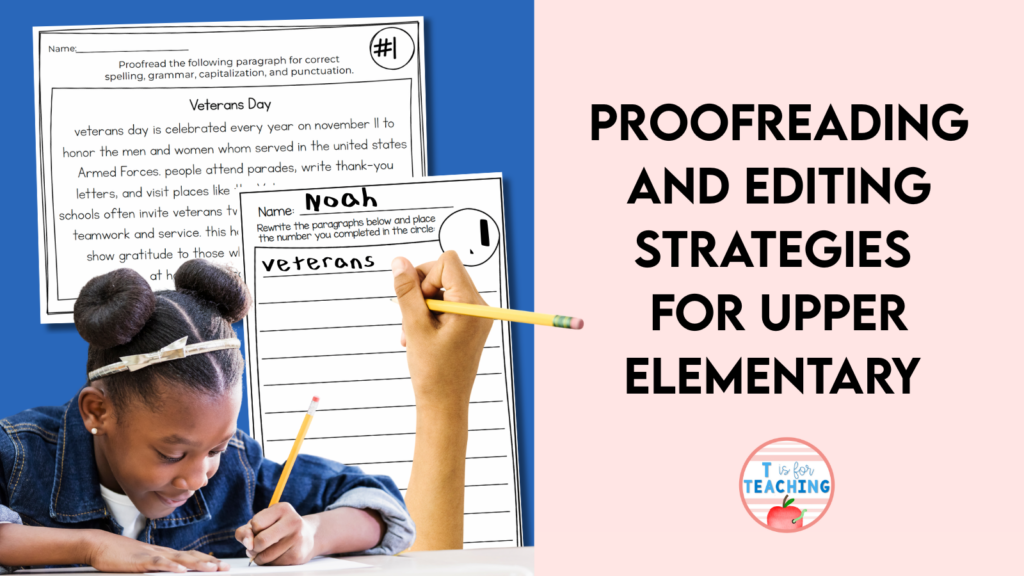
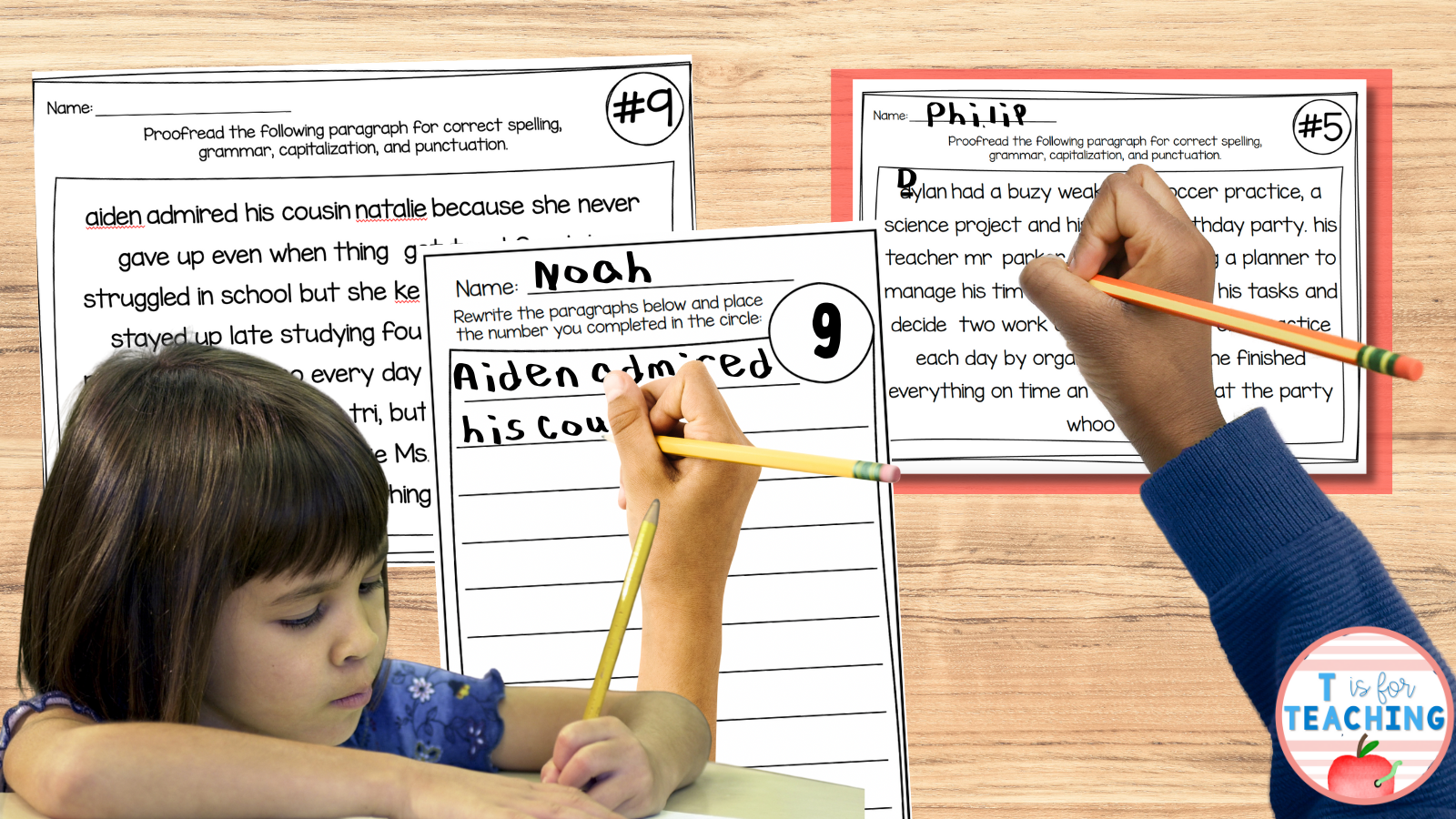
That’s exactly why I created my Proofreading & Editing Practice Paragraph Cards — to give students consistent practice while saving teachers major prep time. The BOY set reinforces spelling, punctuation, capitalization, and grammar through engaging paragraph cards and is easy to use for centers, independent practice, or homework.
How to use proofreading cards in real classrooms (5 easy ways)
Here are teacher-tested ways to plug them in:
1) Morning Work (my favorite)
One card a day = consistent practice without a whole extra block.
2) Literacy Centers
Add a recording sheet + colored pencils and call it the “Editing Detective Station.”
3) Small Groups
Use the same card:
-
first as a teacher-led model
-
then as independent practice
-
then as a “find the errors faster” challenge
4) Early Finishers
Keep a ring of laminated cards in a basket. Students grab one, edit, and check with an answer key.
5) Spiral Review/Test Prep
Because editing skills are cumulative, these work well as quick spiral review leading up to benchmark windows.
Differentiation ideas (without making 3 versions)
You can keep the same paragraph and adjust the task:
-
Support: “Find and fix 5 errors. Start with capitals and periods.”
-
On-level: “Find and fix all errors.”
-
Challenge: “Fix the errors AND rewrite one sentence to make it stronger.”
You can even have students label the error type (“C” for capitalization, “P” for punctuation, etc.) to deepen the thinking.
Get your FREE Weird and Gross Animal Facts Proofreading Practice HERE.
Want to keep this going all year? Grab the bundle and save.
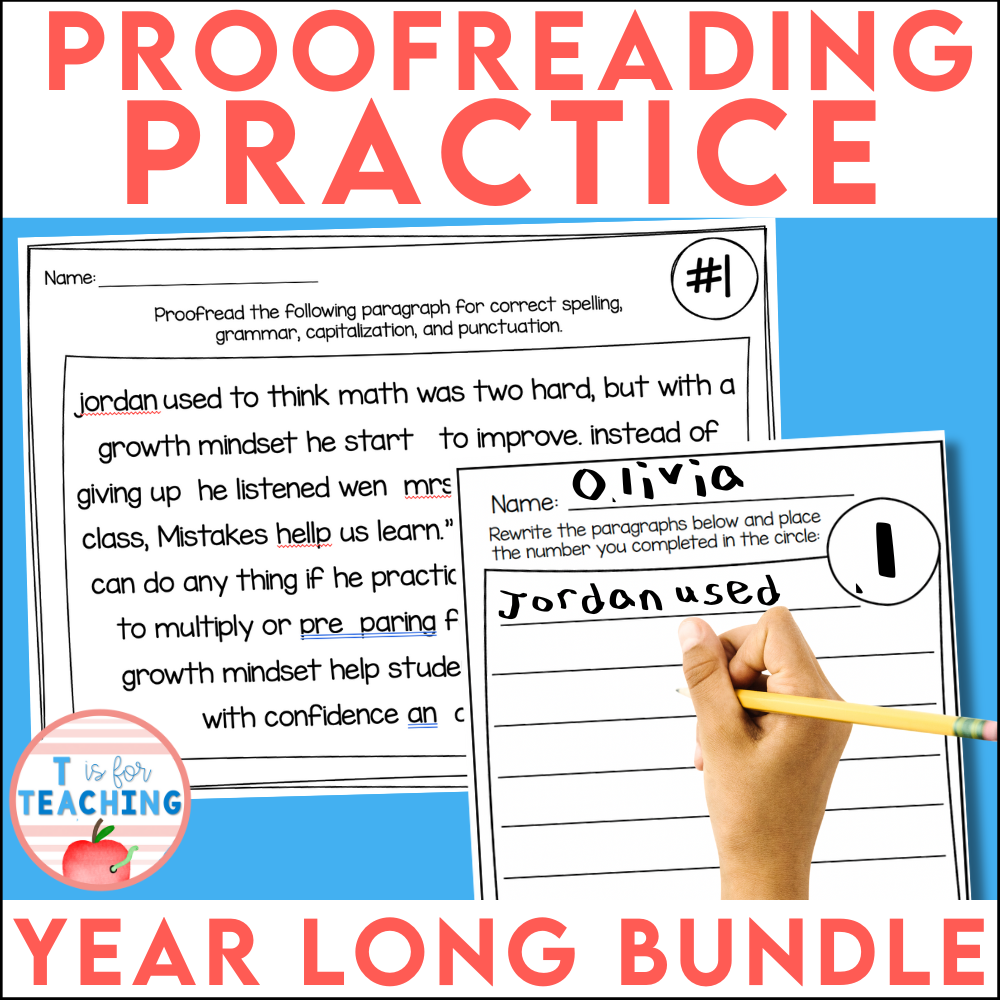
If you’re the kind of teacher who loves systems (hi, same), the best way to make proofreading stick is to keep it consistent across seasons and themes.
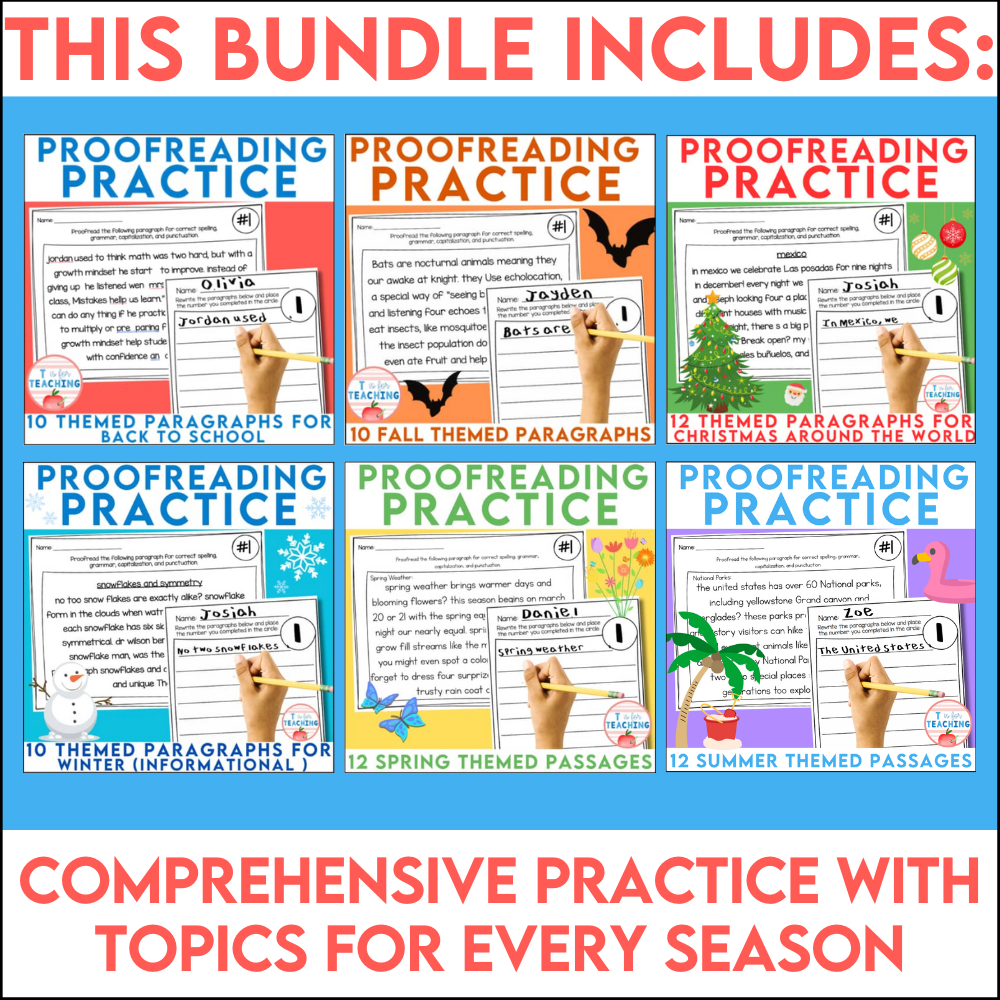
That’s why I also bundled my paragraph card sets together — the bundle includes five sets for different times of year, and it’s discounted. According to the listing, teachers save $5 by purchasing the bundle (you’re basically getting “one and a half sets free”).
If you’re building a year-long routine, the bundle is the easiest “set it and forget it” option.
Final thought: proofreading improves when it becomes a habit, not an event
Students don’t become stronger editors because we told them to “check your work” 400 times.
They become stronger editors when we give them:
-
a repeatable strategy
-
short, consistent practice
-
opportunities to apply it to real text
That’s exactly what these paragraph cards were made to support — low prep for you, high impact practice for them.