Like every teacher, it takes a few years to find your rhythm when it comes to grading and giving feedback. You tweak and adjust your systems until you land on one that works for you and your students. For me, that magic system was this Math Rubric — a simple, student-friendly tool that completely changed how my students viewed their work, their effort, and their growth.
I want to save you some of that trial-and-error time and share exactly how I introduce and use my math rubric in the classroom. It sets clear expectations, builds student confidence, and makes grading so much easier — a total win-win.
Why I Needed a Rubric
Before I started using this rubric, I noticed a common theme during my math block:
-
Students didn’t really understand what “good” math work looked like.
-
Self-assessments were vague — they’d say, “I think I did okay,” without any real reflection. Even using thumbs up, sideways, or down wasn’t very clear.
-
I was spending too much time explaining why a problem was wrong without helping them see where they could grow.
I wanted a system that was clear, consistent, and growth-oriented. I wanted my students and I to be on the same page and speak the same “language” in terms of grading. That’s how my 1–4 Math Rubric was born.
The Math Rubric: A Quick Overview
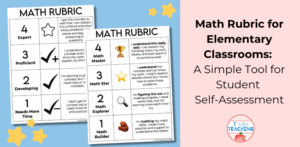
Here’s the breakdown of the rubric I use every single day:
-
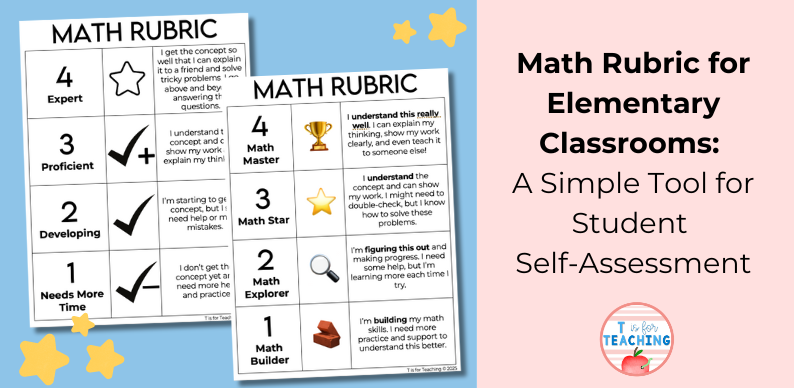
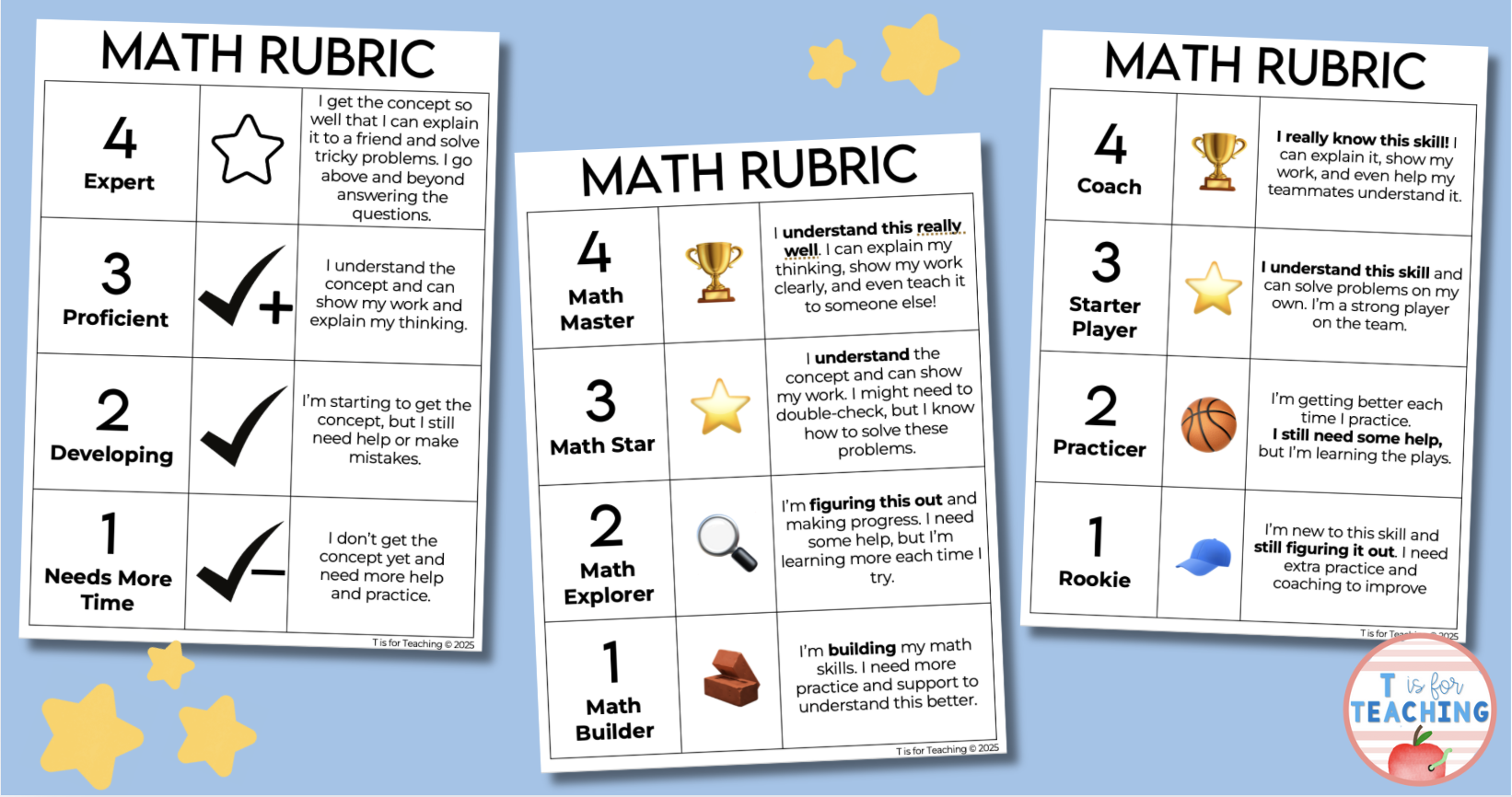
4 – Expert / Math Master: Above and beyond; the student really understands the concept and could teach it to someone else. They exceed the expectations of the problem. This level is hard to achieve — at the beginning of the year, I rarely give 4s.
-
3 – Proficient / Math Star: Solid understanding; the student meets expectations, understands the concept, and shows their work clearly.
-
2 – Developing / Math Explorer: The student is starting to understand but still needs support. Some answers are correct, while others show misconceptions.
-
1 – Needs More Time / Math Builder: The student is still building their foundation and needs more practice to master the concept.
The key here? Every level represents growth. A “1” isn’t bad — it just means you’re still building those skills, and we’re going to keep practicing together.
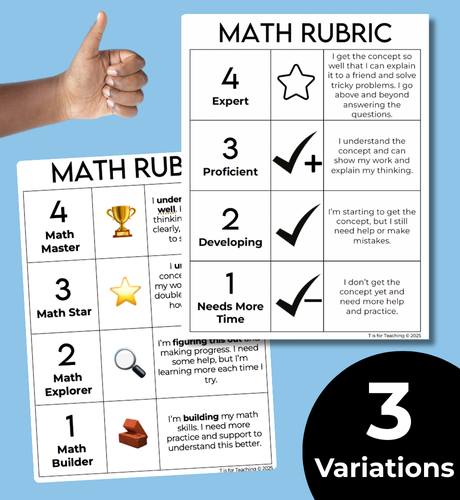
Quick note: I usually pick one set of terms — either “Expert, Proficient…” or “Math Master, Math Star…” — and stick with it to keep things consistent. Choose the set that feels natural for your classroom.
How I Introduce the Rubric
I roll out the rubric during the first weeks of school because I want it to feel like part of our classroom culture, not just a grading tool.
Here’s what that looks like:
-
Anchor Chart: I make a large, colorful poster of the rubric and keep it up all year long.
-
Mini-Charts: I print smaller versions for students’ math notebooks — you can download yours [here].
-
Modeling: I show examples of work — sometimes my own, sometimes anonymized past student work — and we discuss where it falls on the rubric and why.
-
Student Practice: I project a sample problem and have students hold up fingers (1–4) to rate the work. Then we discuss their reasoning as a class.
This modeling is powerful. It helps students see that a 4 isn’t about perfection — it’s about clearly showing their thinking and even explaining it to others.
Daily Use: Making the Rubric Routine
Once students are familiar with the rubric, we use it every single day:
-
Self-Evaluation: When students finish their work, they rate themselves with a “1,” “2,” “3,” or “4” in the upper right-hand corner of their paper.
-
Teacher Feedback: I compare their rating to mine and either agree or leave specific feedback if it needs adjusting.
-
Class Discussions: During group lessons, we project student work (anonymously) and rate it together. Students explain their reasoning, which builds their ability to reflect and justify their thinking.
This small step builds ownership and reflection into every assignment without adding extra work for me.
The Impact on My Students
The shift was incredible. Students went from saying, “I’m just bad at math,” to saying things like, “I’m a 2 right now, but with more practice, I can get to a 3.”
That growth mindset language changes everything. Suddenly, students aren’t afraid to make mistakes. They see every level as part of their journey, not as a judgment of their intelligence.
They also know exactly what success looks like. Sometimes success is fuzzy for students, but this rubric — paired with clear assignment expectations and learning targets — makes it tangible and attainable for everyone.
And for me? Grading is quicker, feedback is sharper, and parent conferences are smoother because we’re speaking the same language about progress. Over time, I even started using this rubric system in all subjects, not just math.
Tips for Success
If you’re ready to try a math rubric in your classroom, here are a few tips to make it work:
-
Keep it visible. Post your rubric where everyone can see it.
-
Model often. Don’t just introduce it once; revisit it regularly. I like to check in at the start and end of a lesson. Often, students will rate themselves a 1 or 2 during the introduction of a new concept, but after guided practice and independent work, that rating shifts. Normalizing that growth is so important!
-
Celebrate growth. A student moving from a 1 to a 2 deserves just as much celebration as a student who earns a 4.
-
Use consistent language. Whether you say “Math Master” or “Expert,” the more you weave the language into your routines, the more natural it becomes for students.
Ready to Try It?
If you’d like to use my math rubric in your classroom, you can grab my FREE printable version here. You can even make a large anchor chart to keep up all year, just like I do.
I hope this tool brings the same clarity and confidence to your students that it has brought to mine. It’s such a small shift, but it’s made a huge difference in my math block.